The different elements of non-verbal communication
Posted on avril 3, 2013 by Frank
We all know that is a very important skill in today’s life. Recruiters probably made it one of the most important characteristics looked for in a new employee, especially if that person has to work with the public. Communication is definitely divided into two parts: verbal communication and non-verbal communication. Even though people usually focus on the first one, did you know that the words you say only account for 7% of the “impact” of your communication? Voice, pith and volume account for approximately 38%, which leaves 55% for what is completely non-verbal. For this reason, it becomes very important to learn how to decode what is not said. Let’s start your adventure by understanding what the different aspects of non-verbal are.
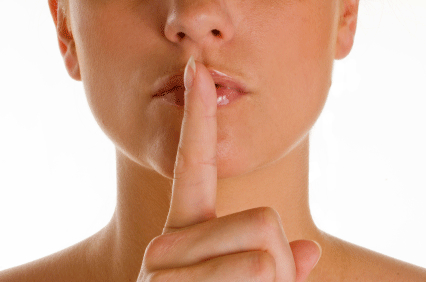
Your posture means a lot
The way you place your body affects incredibly how you will be perceived by others. For example, your posture can show how much you are involved in a conversation, based on how much your body is “opened”. While you are sitting, if you lean backward, you may show indifference or even boredom. However, moving your body forward could show great interest towards the person you communicate with. Crossing your arms in a certain pattern (with hands under your elbows) could show hostility, but can just be interpreted as a way of making yourself comfortable if the hands are revealed.
What about eye contact?
Eyes could reveal a lot more about yourself that what you think. First of all, pupils tend to dilate themselves when you are attracted to a person. The length and frequency of eye contact could indicate the interest of a person in a given conversation: very sparse contact means a low interest. This, however, can be wrongly interpreted: some Asian cultures, for example Japanese, believe that keeping eye contact is impolite and should be avoided. This is also present in some Hispanic and Middle Eastern cultures. Eye contact could also be interpreted as sexual interest by some people.
Shaking hands
Many other factors could be studied in this article, but the way that people shake hands is another good example of the impact of non-verbal communication. In job interviews, that hand shake is considered one of the most crucial moments: the recruiter should base its first impression on that moment, and we all know first impression is quite important. Some dominant people will also shake hands in a different way. Normally, palms should end up in a vertical angle during a hand shake. However, some people will have the habit to “crush” their counterpart by twisting the shake, putting their own hand on top of the other.
So many things could be said about non-verbal communication: a simple article can only water your mouth, but it will definitely not train you properly in the art of interpreting other’s people actions and influencing them using your body. It could be interesting for you to take a non verbal test in order to see how well you understand this discipline. Then, you might seek special training to complete your knowledge.