How work diesel engine
Posted on mai 9, 2013 by Frank
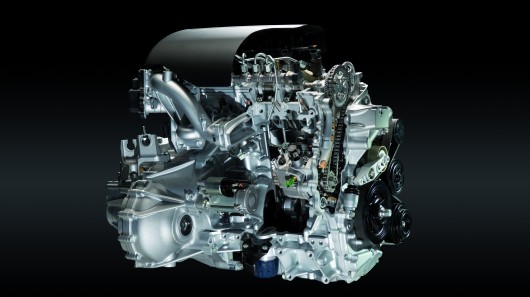
A diesel engine is an internal combustion engine that uses heat created by the compression to initiate ignition of injected into the combustion chamber diesel-air mix. The compression ratio must be very high in order to ignite the diesel to generate power. The absence of spark and related components simplifies maintenance.
Diesel has an octane rating between 15 and 25. More precisely, the vocabulary related to diesel refers to Cetane. The higher the cetane number, the higher it will burn easily, which is the opposite of octane. If a diesel cetane rate too low is used, the engine may not work or even start.
With older diesel models, it had to turn the ignition key to the glow plug relay and glow works as indicator lights on the dashboard. According to the outside temperature, the engine can take 15 seconds to reach its ignition temperature. When the icon appears to disappear, we could then start. (source : http://www.dieselspec.ca)
Nowadays, vehicles are much more sophisticated and often require less than two seconds to reach the correct temperature. With the majority of diesel engines, it is not necessary to wait until the icon disappears before starting the vehicle.
The benefits of a diesel engine
The engine design provides good torque at low rpm. The best lubrication that generates diesel, in addition to its strongest components, significantly extends the life of these engines.
The system of a diesel engine is lower than that of a gasoline engine. For every drop of fuel, the diesel engine will travel a greater distance than gasoline. The average consumption measured in liters per 100 kilometers is always advantageous with this type of engine. It is less expensive to use, thanks to a better use and less maintenance.
Turbocharging and direct injection
We find the same technological advances in diesel engine that is offered on a gasoline engine. They can increase efficiency and reduce fuel consumption.
The disadvantages of diesel
Often the diesel bad odor, high vibration, noise and pollution it produces is associated. The presence of sulfur leads to the creation of particles or even soot visible in the thick black smudge from the exhaust. The standards have been tightened and these disadvantages have largely disappeared.
Clean diesel
The transformation began in 2006. We then saw the emergence of diesel with very low sulfur content (Ultra Low Sulphur Diesel). Rather than containing 500 parts per million of sulfur, account now 15, an improvement of 97%. This radical change in the quality of fuel has only positive effects on the environment.
Automakers have gone even further. The « AdBlue » system was introduced. This involves adding a solution of urea to reduce nitrogen oxide emissions. Simply fill the tank every oil change, and the device operates automatically. Now found that green technology on several vehicles.
The particle filter often added to the output of the catalyst can also prevent the spread of toxic substances into the atmosphere.